
Fuel Surcharge Audits: How Canadian Sellers Catch Shipping Fuel Fee Errors
Fuel surcharges quietly add a big percentage to every Canadian parcel. Here is how a fuel surcharge audit works and how to recover the amounts your carrier billed in error.

ShipSherlock Team
The line item most sellers never check
Look at any parcel invoice from Canada Post, UPS, FedEx or Purolator and you will find a fuel surcharge sitting next to the base rate. Most Canadian sellers glance at the total, see that it roughly matches what they expected, and move on. That habit is exactly why fuel surcharge errors go unnoticed for months.
The fuel surcharge is not a flat fee. It is a percentage applied on top of your shipping charges, and that percentage changes every single week. When the rate is calculated correctly, it is a legitimate cost of doing business. When it is calculated on the wrong base, applied at the wrong week's rate, or stacked onto charges it should never touch, you are overpaying. A fuel surcharge audit is the process of checking that math, shipment by shipment.
How the fuel surcharge actually works
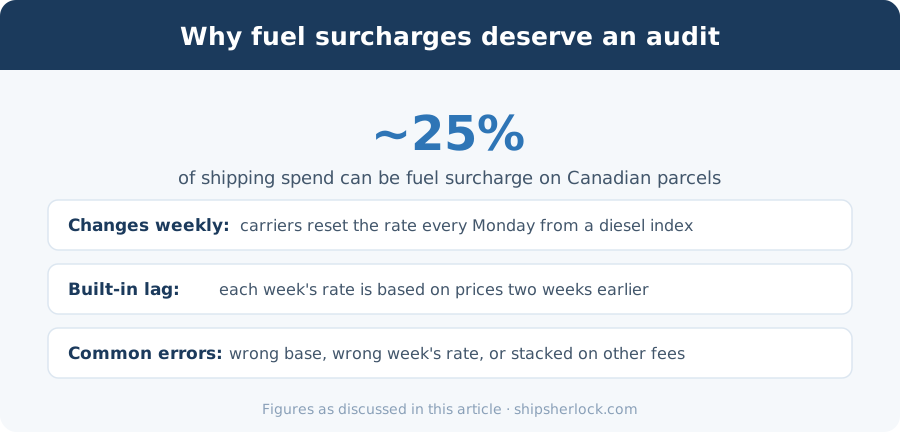
Canadian carriers tie their fuel surcharges to the national average price of diesel. Canada Post uses an independent fuel-price monitor and reviews the surcharge weekly, adjusting it every Monday. The rate for a given week is based on a reporting period from two weeks earlier, so there is a built in lag between what diesel costs today and what shows up on your invoice.
UPS Canada runs a similar index. Its fuel surcharge also resets every Monday based on the national average diesel price, and for regular account holders it appears as a separate itemized charge on the weekly invoice. FedEx and Purolator follow the same weekly-index approach.
The important detail is what the surcharge applies to. Canada Post applies it to your base shipping rate plus applicable service charges. UPS applies it to the net package rate plus a defined list of accessorial charges. In other words, the surcharge is a percentage of a moving number, and if that underlying number is wrong, the fuel charge is wrong too.
One more thing worth knowing: these percentages are high right now. Through 2026, Canada Post domestic fuel surcharges have run well into the high twenties and have spiked into the thirties during periods of fuel-price volatility. When the rate is that large, even a small error in the base it is applied to turns into real dollars.
Where the errors hide
There are four common ways a fuel surcharge ends up overstated.
The first is the wrong base. If a carrier overcharges your base rate, applies a dimensional weight that is too high, or bills an accessorial fee you should not have been charged, the fuel surcharge gets calculated on that inflated number. You are then paying a surcharge on a surcharge of an error.
The second is the wrong week. Because the rate changes every Monday and is set on a two-week lag, a shipment can be billed at the rate from the wrong period. This is easy to miss because you would need to match each shipment's date against the published weekly rate to catch it.
The third is stacking on charges that should be exempt. Not every fee on your invoice is supposed to carry a fuel surcharge. When the surcharge gets applied to line items outside the defined list, the total creeps up.
The fourth is refunded shipments that keep their surcharge. If you win a late-delivery refund on a guaranteed shipment, the fuel surcharge on that shipment should come back with it. Carriers do not always reverse it automatically.
What a fuel surcharge audit looks like in practice
A proper audit pulls your actual invoice data, identifies the fuel surcharge line for every shipment, and recalculates it from scratch. For each parcel that means confirming the correct base rate, confirming the published surcharge percentage for that shipment's week, checking which charges the percentage was applied to, and flagging anything that does not reconcile.
Doing this by hand for a handful of shipments is realistic. Doing it across hundreds or thousands of parcels a month is not, which is why most sellers never attempt it. The errors are individually small, often a dollar or two, but they repeat on a large share of your volume and compound week after week.
A realistic picture of the money
Say you ship 800 parcels a month and the fuel surcharge is running around 25 percent of your shipping spend. If even a modest slice of those shipments carry a fuel charge that is overstated because of a base-rate or accessorial error, the recoverable amount typically lands in the tens to low hundreds of dollars a month. That is not life changing on its own, but it is money you already earned and are simply leaving with the carrier. Over a year, combined with late-delivery refunds and other billing errors, it adds up to a number worth caring about.
To be clear, fuel surcharges themselves are not refundable just because they are high. What is recoverable is the portion that was billed in error: a surcharge calculated on an inflated base, applied at the wrong rate, stacked on an exempt charge, or left in place after a shipment was already refunded.
Start with one month of invoices
If you want to know whether this applies to you, the fastest move is to run one month of your shipping invoices through an audit and see what comes back. ShipSherlock checks the fuel surcharge on every shipment automatically, matches it against the correct weekly rate and base, and flags the amounts your carrier owes you. There is nothing to install and no commitment to find out.
Related guides
Deadlines, eligibility and claim steps for the carriers covered above.
- Canadian Carrier Refund RulesFiling deadlines and eligible services for UPS, FedEx, Canada Post and Purolator, kept current.
- UPS Refund Recovery in CanadaHow UPS Guaranteed Service Refunds work and what the 15-day window covers.
- Canada Post OverchargesOn-Time Delivery Guarantee claims and the 30-business-day deadline.
- Shipping Audit for Canadian SellersWhat a full invoice audit checks, and how much sellers typically recover.
Stop overpaying
Done reading? Start recovering.
ShipSherlock audits every invoice automatically. You pay nothing unless we find money your carrier owes you.