
Address Correction Surcharges: Why You Keep Getting Charged and How to Dispute Them
Carriers add an address correction fee of around 25 dollars per package, often when nothing was wrong with your address. Here is what triggers these surcharges in Canada and how to claim them back.

ShipSherlock Team
The Fee Nobody Warns You About
You ship a package to a customer. It arrives fine. Then weeks later your carrier invoice has a line you did not expect: an address correction fee of roughly 25 dollars. The package was delivered, the address worked, and you are still being charged.
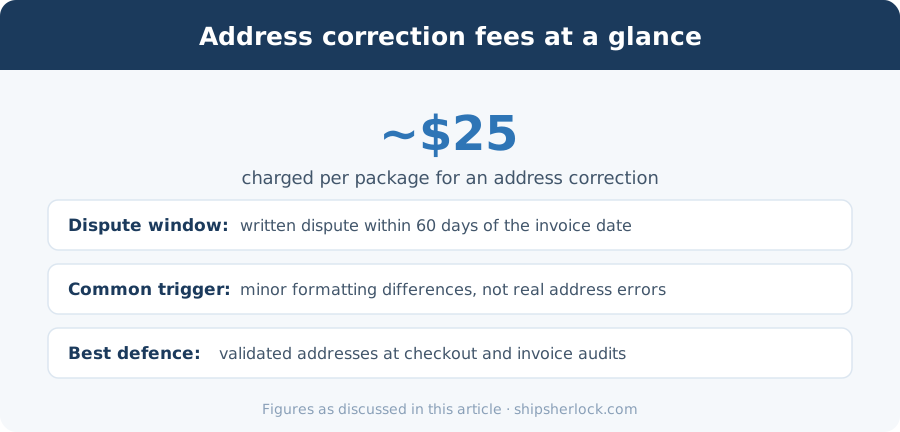
Address correction surcharges are one of the most common and most disputable line items on a Canadian carrier invoice. UPS raised its address correction fee to about 25.50 dollars per package for 2026, up from 24 dollars the year before, and FedEx applies a similar charge. At a few of these a week, they add up fast, and a large share of them are applied when the address was actually fine.
What Actually Triggers the Fee
A carrier adds an address correction fee when its system decides the address you provided was incomplete, incorrect, or otherwise needed fixing to complete delivery. The trigger is automatic, not human. Carrier address verification runs when the label is created and again at the first scan in the network. If either check flags the address, the fee is locked in, and a manual override at the counter does not undo it.
Here is the catch that costs sellers money. The carrier's address database is not always current. A commercial plaza that was recently subdivided, a new development, a unit number formatted slightly differently than the carrier expects, or a rural route that the database has not caught up on can all trip the flag. Your address was deliverable. The carrier's records just disagreed, and you paid for the disagreement.
Common situations that produce a fee even when the shipper did nothing wrong:
- A correct address that the carrier's database has outdated or incomplete records for
- A unit, suite, or buzzer number that was present but formatted differently than expected
- A business address the carrier has misclassified
- A genuine typo that the carrier corrected and then billed you for, sometimes more than once on repeat shipments to the same customer
Why These Slip Through
Most sellers never dispute address correction fees for the same reason they never dispute anything else on a carrier invoice. The fee is buried in a long statement, it is only 25 dollars on its own, and checking whether each one was legitimate means cross referencing the flagged address against what you actually entered. Doing that by hand across hundreds of shipments is not realistic, so the fees get paid and forgotten.
There is also a quieter problem. When a customer's address gets flagged once, repeat shipments to that same customer often get flagged again. So a single bad database record can generate the same wrongful fee month after month until someone catches it.
What an Address Correction Fee Is Worth Chasing
The math is simple but easy to underestimate. A seller shipping a few hundred packages a month who sees address correction fees on even two percent of shipments is looking at several wrongful charges a week. At roughly 25 dollars each, that is typically a few hundred dollars a month, or in the low thousands per year, sitting on invoices as recoverable money.
It is not the headline number that GSR late delivery refunds produce, but it is steady, it repeats, and a meaningful portion of it is disputable because the address was correct as submitted.
How to Dispute an Address Correction Fee
Both UPS and FedEx accept disputes, and the process is workable if you have the documentation ready.
Step 1: Confirm the address was correct
Pull the address you actually entered on the label and compare it to what the carrier flagged. If your address was complete and deliverable, you have a basis to dispute. Validate it against the official postal record if you want a clean reference.
Step 2: File within the deadline
Both carriers generally require a written dispute within 60 days of the invoice date. Miss that window and the charge usually stands no matter how clearly it was wrong. This is the single most common reason valid disputes fail.
Step 3: Submit through the carrier portal with evidence
File the dispute through the carrier's billing portal. Include the tracking number, the address you submitted, the address validation result, and a short note stating the address was complete and deliverable as provided. Keep it factual and specific.
Step 4: Watch for the credit and for repeats
Approved disputes come back as a credit on a later invoice, often with a vague description. Check that it lands. Then watch the same customer's future shipments, because a flagged address tends to keep getting flagged until the underlying record is fixed.
Let the Audit Catch Them For You
The reason address correction fees go unrecovered is not that they are hard to dispute. It is that finding the wrongful ones means checking every flagged shipment against what you submitted, every billing cycle, inside a 60 day clock.
ShipSherlock reviews every line on your UPS, FedEx, Canada Post, and Purolator invoices, flags the address correction fees worth disputing, and files the claims before the window closes. You do not chase them one by one, and you do not pay anything unless we recover.
Try the free shipping audit and see how many address correction fees you have been quietly paying.
Related guides
Deadlines, eligibility and claim steps for the carriers covered above.
- Canadian Carrier Refund RulesFiling deadlines and eligible services for UPS, FedEx, Canada Post and Purolator, kept current.
- UPS Refund Recovery in CanadaHow UPS Guaranteed Service Refunds work and what the 15-day window covers.
- FedEx Refund Recovery in CanadaClaiming the FedEx Money-Back Guarantee, including the 2026 Canadian reinstatement.
Stop overpaying
Done reading? Start recovering.
ShipSherlock audits every invoice automatically. You pay nothing unless we find money your carrier owes you.